
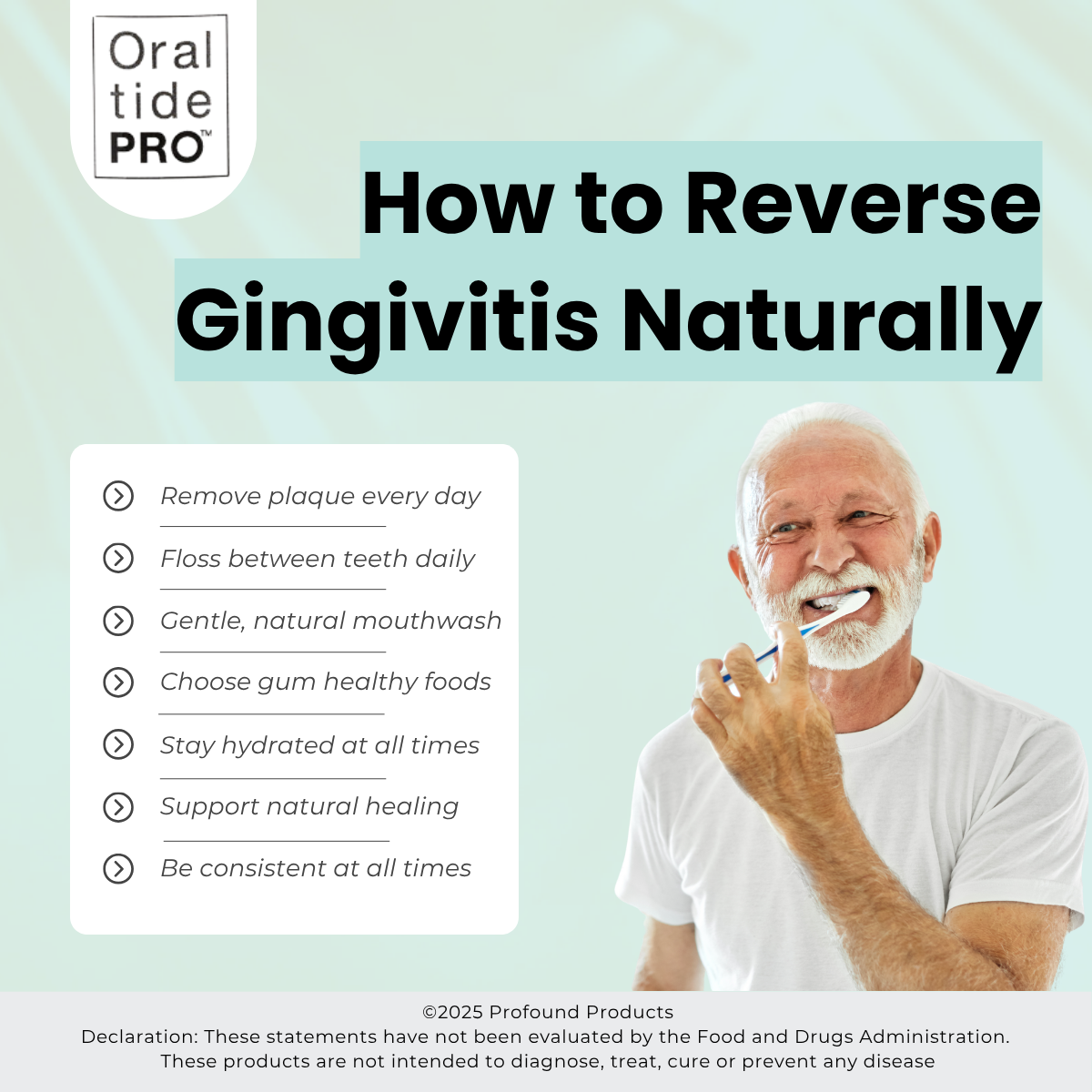
How to Reverse Gingivitis Naturally
Reversing gingivitis naturally
Going “Natural” Doesn’t Mean Ignoring Professional Care.
Building a Natural Gum Care Routine.
If you’ve noticed you have sore, swollen or bleeding gums, it’s most likely you’re suffering with a mouth condition called gingivitis. If you have, the good news is that gingivitis is reversible in its early stages. Unlike advanced gum disease, gingivitis affects only the gum tissue and, with the right care, healthy gums can recover. Even better, pro
The key is creating an environment where your gums can heal while reducing the bacteria and inflammation that caused the problem in the first place.
In many cases, gingivitis can be reversed naturally without using harsh treatments through a combination of:
Going “natural” doesn’t mean doing nothing – it means working with your body’s own healing mechanisms rather than simply masking the symptoms.
Plaque is a sticky film of bacteria that is constantly forming on the teeth and gums. It is the primary cause of gingivitis. Removing plaque properly every day stops a build-up and the resulting inflammation caused if it is left in place. Removing a build up and then keeping on top of it also allows the gums to recover.
Aim to:
Over-brushing or using excessive pressure may make you feel like you’re cleaning properly, but this can actually irritate already inflamed gums, so gentle, consistent cleaning is usually more effective than brushing harder.
A toothbrush alone simply cannot reach every surface where bacteria collect. As well as brushing, you should clean between your teeth each day with either floss, interdental brushes or a water flosser to help remove plaque from the areas where gingivitis often begins.
If your gums bleed at first, don’t assume you should stop. Bleeding is often a sign of inflammation rather than damage. As the inflammation settles and the gums become healthier, bleeding frequently reduces.
If you need some tips on stopping gum bleeding fast, please click here.
Many conventional mouthwashes rely on alcohol or strong antiseptic ingredients. While these may reduce bacteria temporarily, alcohol-based products can be harsh on the mouth, leaving it feeling dry. As saliva plays an important role in maintaining a healthy oral environment, this isn’t a good thing.
Choosing an alcohol-free and fluoride-free mouthwash can help support daily oral care without unnecessarily drying or irritating the tissues that produce saliva and keep the mouth healthy.
OraltidePRO™ Mouthwash has been formulated with this in mind. Its natural, alcohol-free and fluoride-free formulation is designed to complement a good oral hygiene routine while helping maintain a balanced environment within the mouth. Rather than replacing brushing and interdental cleaning, it works alongside them as part of a holistic approach to supporting healthy gums.
Your gums depend on good nutrition just as much as the rest of your body. A balanced diet rich in vitamins, minerals and antioxidants helps support normal tissue maintenance and immune function.
Particularly important nutrients include:
Harmful oral bacteria is also fuelled by sugary snacks and drinks, so reducing these is beneficial on many counts.
Saliva is one of your body’s natural defence systems and it cannot be produced properly if you are dehydrated. It is essential because it helps to wash away food debris, neutralise acids, deliver essential minerals to the teeth and support a healthy balance of oral bacteria.
Drinking plenty of water throughout the day encourages saliva production and helps keep your mouth functioning as it should. If you frequently experience a dry mouth, addressing this can be an important part of improving overall gum health.
Healthy gums rely on healthy circulation and an effective immune response. Leading a healthy lifestyle can make a real difference, so putting certain things in place such as sleep and exercise are key.
These factors don’t just benefit your overall health – they also influence how effectively your gums repair themselves.
One of the biggest misconceptions about gingivitis is that a few days of better brushing will solve the problem. In reality, healthy gums are maintained through consistency, good oral hygiene and keeping on top of the foods, drinks and products you put into your mouth.
Putting aspects such as daily plaque removal, gentle oral care and supportive lifestyle habits allow inflammation to settle over time. Many people begin to notice improvements within a couple of weeks, but maintaining those improvements depends on continuing the routine.
Whilst many cases of early gingivitis respond well to improved home care, it’s still important to see your dentist or hygienist regularly. Professional cleaning removes hardened plaque (calculus or tartar) that cannot be removed with brushing alone.
If symptoms persist despite good oral hygiene, become painful, or you notice loose teeth or persistent bad breath, professional assessment is essential to rule out more advanced gum disease.
A simple daily routine should include:
Reversing gingivitis naturally is less about finding a single miracle method and more about creating the right conditions for your gums to heal. By reducing plaque, supporting your body’s natural healing processes and choosing gentle oral care products that work with your mouth’s natural balance, it’s often possible to restore healthier gums before permanent damage occurs.
Related articles